
Research Article 
 Creative Commons, CC-BY
The Impact of HIV on the Detection of Serological Markers for SARS-COV-2 Infection
*Corresponding author: Dong Chen, Wenzhou Central Hospital, The Ding Li Clinical Institute of Wenzhou Medical University; School of Laboratory Medicine and Life Science, Wenzhou Medical University; Wenzhou Central Blood Station; The Second Affiliated Hospital of Shanghai University, Baili East Road &252#, Wenzhou, Zhejiang Province, 325000, China.
Received: February 07, 2025; Published: February 13, 2025
DOI: 10.34297/AJBSR.2025.25.003373
Abstract
Purpose: Through analysis of the results of HIV serological detection in non-remunerated blood donors during the different periods of the COVID-19 pandemic, aiming to identify the factors influencing HIV serological detection results.
Methods: A total of 681,232 non-remunerated blood donors in Wenzhou from January 2017 to November 2023 were selected. The pandemic periods were categorized into the pre-pandemic; controlled pandemic; concentrated pandemic; and stable pandemic period. Specimens from eligible non-remunerated blood donors were collected for HIV serological infection markers and nucleic acid testing. HIV reactive specimens were sent to the Wenzhou CDC for confirmatory testing.
Results: A total of 681,232 specimens were tested, yielding a reactive rate of 0.14%. The reactive rate in the pre-pandemic period was 0.08%, while the concentrated pandemic period had a rate of 0.91%. In the concentrated infection period, 184 specimens were reactive, with 178 showing singlereactive results. The S/CO value was low reactive in 94.9% of cases, but all results were confirmed as negative in the confirmatory testing. There were statistically significant differences in reactive rates between different genders, ages, and donation frequency groups. Among the 37 specimens with uncertain confirmatory testing results, 5 band types and 8 combinatorial patterns were identified, with a relatively high proportion of P 17 and P 24 band types occurring singly.
Conclusion: SARS-CoV-2 infection leads to an increase in reactive results in HIV serological detection. During the COVID-19 pandemic period, medical institutions should adjust strategies for HIV detection promptly to avoid wasting a large amount of blood resources.
Keywords: SARS-COV-2, COVID-19 Pandemic; non-Remunerated Blood Donors; False Reactivity; HIV Serological Detection
Introduction
Acquired immunodeficiency syndrome (AIDS), is a severe infectious disease transmitted through sexual, vertical, and bloodborne routes [1]. Lymphocytes in the human immune system are the primary attacking targets, posing a significant threat to physical fitness by destroying a substantial number of CD4+T cells [2]. There is a risk of HIV infection if blood products containing HIV virus are inadvertently transfused. Accurate detection of blood products for HIV antigen/antibody is a crucial step in ensuring clinical blood safety [3]. However, variations in the production processes, packaging of coating materials, and methodologies of ELISA detection kits from different manufacturers can lead to false positive (FP) reactivity results, preventing non-remunerated blood donors from donating blood permanently [3-5]. The occurrence of FP reactivity not only wastes precious blood resources but also imposes psychological burdens on non-remunerated blood donors and their families. Reducing the FP reactivity results is a common challenge faced by blood stations.
The outbreak of the COVID-19 at the end of 2019 had a significant impact on the global public health safety. With dynamic adjustments to Chinese epidemic prevention policies, on December 7, 2022, COVID-19 prevention and control strategies were lifted nationwide, leading to the emergence of COVID-19 patients in the community. It is rarely reported on whether non-remunerated blood donors who have recovered from COVID-19 may affect the serological infection markers and nucleic acid testing for HIV. Therefore, this study analyzed the HIV serological detection results of non-remunerated blood donors at different periods of the COVID-19 pandemic. The aim was to clarify the factors influencing HIV serological detection results after recovery from infection with the SARS-CoV-2. This research seeks to provide reference guidelines for medical institutions, blood stations, centers for disease control and prevention, and other health settings.
Study Design and Methods
Experimental subjects
A total of 681,232 non-remunerated blood donors in Wenzhou from January 2017 to November 2023 were included. They were categorized based on different periods of the COVID-19 pandemic: pre-pandemic period (2017-2019): 299,239 individuals; infection control period (2020-2022): 330,578 individuals; concentrated infection period (January-February 2023): 20,170 individuals; infection stable period (September-November 2023): 31,245.
Equipment and Reagents
Detection Equipment: TECAN Freedom EVO 150/8 Fully Automated Liquid Handling System (TECAN), Microlab FAME Fully Automated Enzyme Immunoassay Processing System (F.A.M.E.24/20, Hamilton Bonaduz AG), Sunrise Microplate Reader (TECAN), Cobas Nucleic Acid Testing System (Roche, USA). Serological Detection Reagents (Enzyme-Linked Immunosorbent Assay, ELISA): Reagent 1: Human Immunodeficiency Virus Antibody Diagnostic Kit (Inno Diagnostics), Reagent 2: Human Immunodeficiency Virus Antigen-Antibody Diagnostic Kit (Bio- Rad, France).
Nucleic Acid Testing Reagents (PCR-Fluorescence Method): HBV-HCV-HIV (1+2 Types) Nucleic Acid Test Kit (Roche Diagnostics)
Serological Detection: The specimens from non-remunerated blood donors were detected using ELISA kits from two different manufacturers. If both kits showed non-reactivity, the HIV serological detection result was determined as negative. If both kits showed reactivity or indeterminate reactivity, the result was considered double-reactive. In the case of reactivity or indeterminate reactivity with any one kit, a confirmatory testing was conducted using a double-well detection with the reactive kit. If only a single well showed reactivity or indeterminate reactivity, the HIV serological detection result was considered single-reactive.
Nucleic Acid Testing: Specimens from non-remunerated blood donors were pooled for HIV-RNA testing. If the pooled result showed non-reactivity, all six specimens were considered nonreactive for HIV-RNA testing. If the pooled result showed reactivity, individual detection was performed on the specimens from those six donors. If the individual detection results were non-reactive, the overall result was considered non-reactive for HIV-RNA testing. Conversely, if any individual detection result was reactive, the overall result was considered reactive for HIV-RNA testing.
Confirmatory Testing: For specimens that showed reactivity in serology and/or nucleic acid testing, they were sent to the Wenzhou CDC following biosafety packaging requirements for HIV Western Blotting (WB) confirmatory testing.
Statistical Analysis: Statistical processing involved the use of SPSS 20.0 statistical software for data analysis, and the comparison of reactive rates was conducted through the chi-square (X2) test. A significance level of P<0.05 was considered to indicate statistically significant differences.
Results
Serological Detection Results of HIV in non-remunerated Blood Donors During Different Phases of the COVID-19 Pandemic
During different phases of the COVID-19 pandemic, HIV serological detection results among non-remunerated blood donors were examined. From January 2017 to November 2023, a total of 681,232 specimens were detected, with 957 reactive specimens, yielding a reaction rate of 0.14%. In the pre-infection phase of the COVID-19 pandemic, 299,239 specimens were detected, resulting in 249 reactive specimens (0.08% reaction rate). The reaction rates for individual detects were 0.01% for reagent 1, 0.06% for reagent 2, and 0.01% for both reagents.
During the infection control phase, 330,578 specimens were detected, leading to 435 reactive specimens (0.13% reaction rate). The individual detect reaction rates were 0.03% for reagent 1, 0.09% for reagent 2, and 0.01% for both reagents. In the concentrated infection phase, 20,170 specimens were detected, resulting in 184 reactive specimens (0.91% reaction rate). Reagent 2 exhibited a notably elevated reaction rate during this phase, being 9.8 times higher than the infection control period and 14.7 times higher than the pre-infection phase. In the infection stabilization phase, 31,245 specimens were detected, leading to 89 reactive specimens (0.28% reaction rate). For detailed HIV serological detection results during different phases, refer to (Table 1).
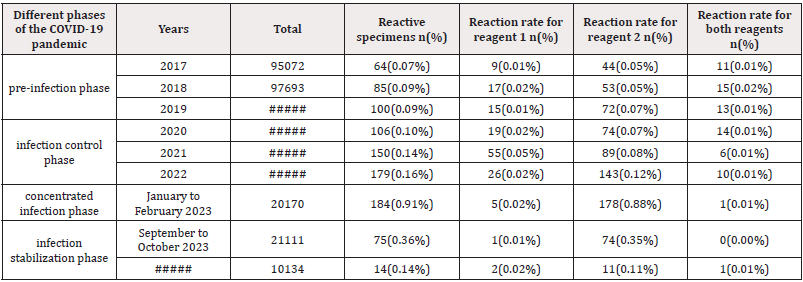
Table 1: Serological detection results of HIV in non-remunerated blood donors during different phases of the COVID-19 pandemic.
Single Reagent 2 Reactive Specimen WB Confirmatory Testing
In January and February 2023, a total of 20,170 specimens were detected for the reactivity of single reagent 2. Among the 178 reactive specimens, 169 had S/CO values in the range of 0.85-5.0, accounting for 94.9%. Nine specimens had S/CO values between 5.0-10.0, constituting 5.1%. Of the 178 specimens, 141 detected negative in the WB Confirmatory testing conducted by the Wen Zhou CDC, representing 79.2%. There were no reactive results, and 37 specimens yielded uncertain results, making up 20.8%. Refer to (Table 2) for detailed information on WB confirmatory testing results of reactive specimens from single reagent 2.

Table 2: WB confirmatory testing results of reactive specimens from single reagent 2.
Comparison of General Information of Single Reagent 2 Reactive Blood Donors
In January and February 2023, a total of 20,170 specimens were detected for the reactivity of the single reagent 2. Out of the 178 reactive specimens, 169 exhibited S/CO values within the range of 0.85-5.0, constituting 94.9%. Nine specimens had S/CO values between 5.0-10.0, accounting for 5.1%. Among these 178 specimens, 141 detected were negative in the WB confirmatory testing conducted by the CDC, representing 79.2%. There were no reactive results, and 37 specimens yielded uncertain results, making up 20.8%. Detailed information on the WB confirmatory testing results of reactive specimens from single reagent 2 is available in (Table 3).
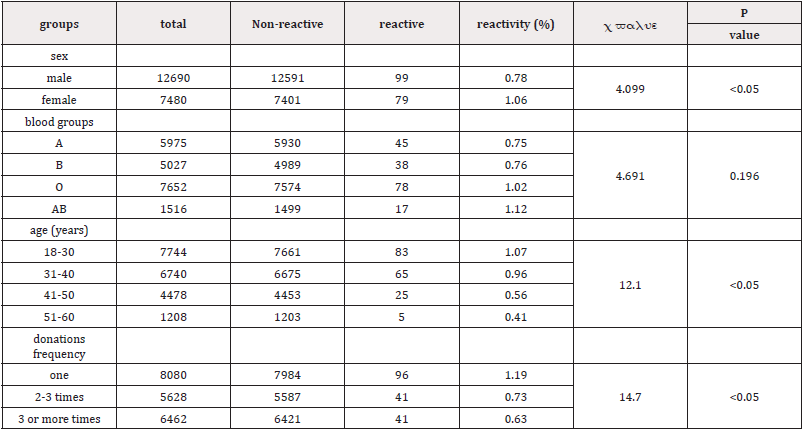
Table 3: Detailed information on the WB confirmatory testing results of reactive specimens from single reagent 2.
The WB Confirmatory Testing Results show an Indeterminate band Distribution and Reagent 2 S/CO Value Situation
The study conducted in January and February 2023 involved analyzing 20,170 specimens for single reagent 2 reactivity. Of the 178 reactive specimens, 94.9% had S/CO values between 0.85-5.0, while 5.1% ranged from 5.0-10.0. In WB confirmatory testing by the CDC, 79.2% detected negative, and 20.8% yielded uncertain results. Analysis of 178 reactive blood donors revealed a significant difference in reaction rates between genders (χ² = 4.099, P = 0.043), no significant difference in blood types (χ² = 4.691, P = 0.196), significant differences in age groups (χ² = 12.103, P = 0.007), and donation frequency groups (χ² = 14.698, P = 0.001). The WB confirmation of uncertain results included diverse band patterns and S/CO values, detailed in (Table 4). General information of reactive blood donors from single Test 2.

Table 4: General information of reactive blood donors from single Test 2.
Discussion
Clinical blood transfusion therapy, as an effective mean of rescuing acute and critical illness patients, has been widely applied in clinical practice in recent years, with increasing attention to blood products and transfusion safety [6]. Tight control of blood products quality and ensuring the safety of clinical blood using are crucial aspects of blood station work. The “Technical Operating Procedures for Blood Stations (2019 Edition)” explicitly stipulate that HIV serological infection markers should be detected at least once each using nucleic acid testing and serological detection [7]. However, in actual work, there are many, including reasons related to the individual being detected (such as having malignant tumors of the blood system, autoimmune diseases, kidney transplantation, or chronic kidney failure); laboratory operation reasons(such as specimen hemolysis, presence of fibrinogen in serum, prolonged waiting or incubation times, etc.) [8-12]; and diagnostic reagents reasons(such as differences in reagents quality, inability to simultaneously balance sensitivity and specificity) [13]. All these factors can lead to false reactive results in the detection. Therefore, multi-link quality control is a key focus in the laboratory blood detection work.
In this study, two ELISA kits from different manufacturers were used for HIV serological detection of non-remunerated blood donors. An 85% cut-off value was set as the gray zone, and any reactive result from either kit was considered as an unacceptable serological detection result, leading to the permanent exclusion of non-remunerated blood donors. The HIV serological detection reactive rates were 0.08% in the pre-infection period, 0.13% in the infection control period, and increased significantly to 0.91% in the concentrated infection period. A notable increase in the reactive rate of reagent 1 was observed, mainly due to an abnormal increase in the reactive rate of reagent 2. To eliminate false reactive results caused by specimens, personnel, and laboratory equipmentrelated factors, the laboratory workforce conducted a selfexamination. Analysis of key quality control points before, during, and after detection, including experimenters, machines, materials, methods, environment, and integrity, revealed no abnormalities. The laboratory also strictly optimized experimental parameters according to the ELISA kits instructions. However, the phenomenon of false reactive results with kit 2 persisted.
Considering the timeline of COVID-19 prevention and control in China, the period from 2017 to 2019 was the pre-COVID-19 pandemic phase, 2020-2022 was the COVID-19 control phase, and in early 2022, COVID-19 vaccination began. In December 2022, there was a significant adjustment in Chinese COVID-19 prevention and control policies, leading to comprehensive lifting of restrictions. Subsequently, there was a concentrated emergence of COVID-19 pneumonia patients in society, causing a stagnation in non-remunerated blood donation work. After the recovery of COVID-19 patients, they gradually participated in non-remunerated blood donation activities. At this time, nonremunerated blood donators produced high-titer SARS-COV-2 antibodies or non-specific substances, maintaining them for an extended period. The sharp increase in the reactive rate of kit 2 may be attributed to the presence of non-specific substances generated due to SARS-COV-2 infection or antibodies produced in response to autoimmune reactions in non-remunerated blood donors, leading to non-specific binding with the antigen components in the reagent kit and causing a significant increase in false reactive results in laboratory HIV serological testing. In March 2023, an emergency plan was initiated, replacing kit 2 with kit 3, resulting in the restoration of HIV reactive rates to normal levels. In September 2023, as the population entered a stable phase of SARS-COV-2 infection, the production of antibodies or non-specific substances in the body continued to decrease. Kit 3 was then replaced with kit 2, and from September to October 2023, the HIV reactive rate with kit 2 decreased from 0.88% in the concentrated infection period to 0.35%. Further decline was observed in November 2023, reaching 0.11%, indicating that the widespread infection of SARSCOV- 2 in the population after comprehensive unblocking was the primary cause of the abnormal increase in the reactive rate of kit 2. Comparison of general information from 178 reactive nonremunerated blood donors revealed higher false reactive rates in females, younger age groups, and first-time donors, possibly linked to the presence of antibodies or non-specific substances post- SARS-COV-2 infection. The study also highlighted limitations in WB confirmation, with 1/3 of uncertain results showing the P24 band, suggesting potential false reactivity. Ongoing monitoring and collaboration with CDC follow-up were recommended for uncertain results, particularly those exhibiting the P24 band.
After the comprehensive lifting of social restrictions, a surge in COVID-19 patients was observed, leading to an increase in falsereactive results in HIV serological tests and significant wastage of blood resources. This situation not only poses psychological and lifestyle challenges for non-remunerated blood donors but is also a significant factor contributing to the decline in the number of blood donations. This study revealed that, by considering WB band patterns, ELISA reagent S/CO values, and nucleic acid test results, laboratory testing strategies can be adjusted promptly during specific periods. Such adjustments can not only alleviate the psychological burden on many false-reactive non-remunerated blood donors but also contribute to the promotion and stabilization of the non-remunerated blood donors. However, it’s worth noting that the occurrence of these false-reactive situations has not been reported abroad. Reagent 2, widely used internationally, raises questions about whether different ethnicities exhibit variations in the production of non-specific antibodies post-infection and what interference COVID-19 infection may introduce to HIV test results. Further research is needed to address these uncertainties.
Funding information
Ministry of Education Industry-Academia Talent Development Program, Grant/Award Number: 202101160011
Conflict of Interest Statement
The authors declare that they have no known competing financial interests or personal relationships that could have appeared to influence the work reported in this paper.
Data Availability Statement
All data generated or analyzed during this study are included in this article and its supplementary material files. Further enquiries can be directed to the corresponding author.
Highlights
In this study, we found an interesting phenomenon. In the concentrated pandemic period, the reactive rate of HIV test kit 2 was abnormally high. We analyzed the HIV serological detection results of non-remunerated blood donors at different periods of the COVID-19 pandemic. We concluded that SARS-CoV-2 infection leads to an increase in reactive results in HIV serological detection. During the COVID-19 pandemic period, medical institutions should adjust strategies for HIV detection promptly to avoid wasting a large amount of blood resources.
Acknowledgements
We gratefully acknowledge the generous contributions of the Wenzhou CDC and non-remunerated blood donors who gave of their time and specimens.
D.C., J.Z., and F.Z. Formal analysis, Investigation, Methodology, Software, Supervision, Validation.
Y.J. and T.C. Formal analysis, Investigation, Methodology, Project administration, Resources, Supervision.
Q.J. Data curation, Methodology, Validation.
L.C., C.Z., J.L., and F.Z. Conceptualization, Formal analysis, Supervision, Validation.
D. C. and J. Z. Conceptualization, Funding acquisition, Project administration, Supervision, Writing - original draft, Writing - review & editing and F. Z. Conceptualization, Data curation, Funding acquisition, Project administration, Writing - original draft, Writing - review & editing. All authors contributed to manuscript revision.
References
- Okano JT, Sharp K, Valdano E, Palk L and Blower S (2020) HIV transmission and source-sink dynamics in sub-Saharan Africa. Lancet HIV 7(3): e209-e2
- Hendricks CL, Mellet J, Durandt C, Brittain D and Pepper MS (2023) Haematopoietic stem-cell transplantation in an HIV endemic area: time to consider donors exposed to or living with HIV. Lancet HIV 10(11): e742-e74
- Hong Y, Huang X, Ling H and Liao H (2012) Prevalence and trend of HIV infection among voluntary blood donors in China since implementation of the Blood Donation Law: a systematic review and meta-analysis. Trop Med Int Health 17(8): 978-9
- Gostin L and Curran WJ (1987) AIDS screening, confidentiality, and the duty to warn. Am J Public Health 77(3): 361-36
- Zaongo SD, Sun F and Chen Y (2021) Are HIV-1-Specific Antibody Levels Potentially Useful Laboratory Markers to Estimate HIV Reservoir Size? A R Front Immunol 12: 786341.
- Mueller MM, Van Remoortel H, Meybohm P, Aranko K, Aubron C, et al (2019) Patient Blood Management: Recommendations From the 2018 Frankfurt Consensus Conference. Jama 321(10): 983-9
- Lynch RM and Bar KJ (2023) Development of screening assays for use of broadly neutralizing antibodies in people with HIV. Curr Opin HIV AIDS 18(4): 171-17
- Ravindranath MH, Ravindranath RM, Morton DL and Graves MC (1994) Factors affecting the fine specificity and sensitivity of serum antiganglioside antibodies in ELISA. J Immunol Methods 169(2): 257-2
- Bratcher PE and Gaggar A (2014) Factors influencing the measurement of plasma/serum surfactant protein D levels by ELISA. PLoS One 9(11): e111466.
- Graham KM, Mylniczenko ND, Burns CM, Bettinger TL and Wheaton CJ (2016) Examining factors that may influence accurate measurement of testosterone in sea turtles. J Vet Diagn Invest 28(1): 12-9.
- Shang C, Wang Z and Liu H (2017) A terminal antibody method based on multiple factors that influence ELISA results for measurement of antibody affinity in clinical specimens. J Virol Methods 240: 42-4
- Revendova KZ, Zeman D, Bunganic R, Karasova K, Volny O, et al (2022) Serum neurofilament levels in patients with multiple sclerosis: A comparison of SIMOA and high sensitivity ELISA assays and contributing factors to ELISA levels. Mult Scler Relat Disord 67: 104177.
- Murphy G and Parry JV (2008) Assays for the detection of recent infections with human immunodeficiency virus type 1. Euro Surveill




 We use cookies to ensure you get the best experience on our website.